


86-755-13922505965 info@TKSystem.com AM 8:00 - PM 18:00
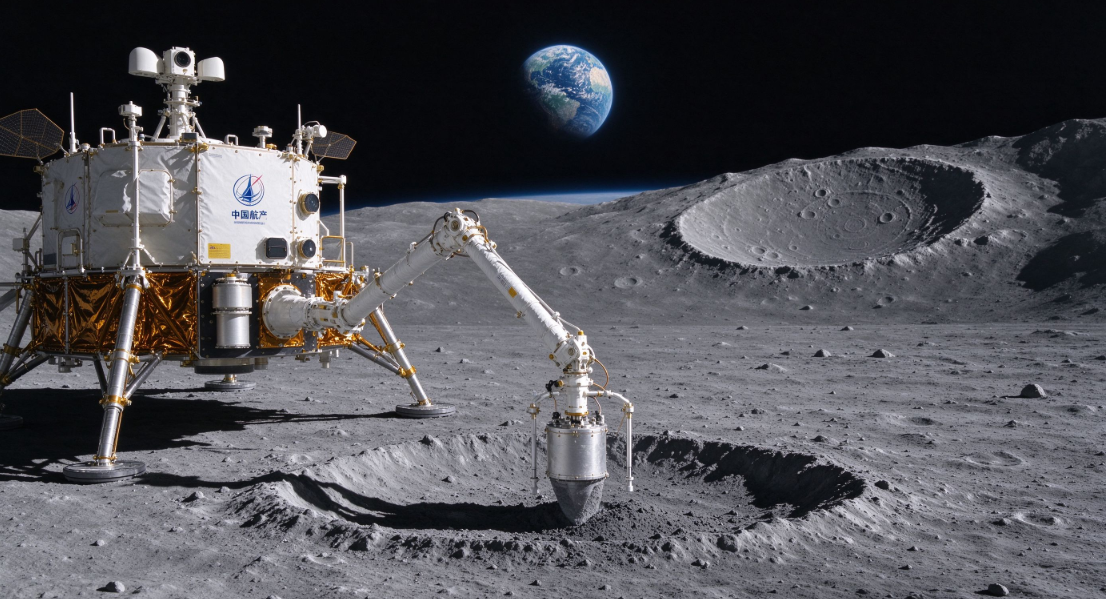
China is pressing ahead with its manned lunar landing program, aiming to send Chinese astronauts to the Moon before 2030. The mission adopts a “two-launch, lunar-orbit rendezvous and docking” architecture, a tailored solution to overcome the constraints of launch vehicle capacity and deep-space flight requirements.
Under the plan, two Long March 10 heavy-lift rockets will be launched separately from the Wenchang Spacecraft Launch Site. One rocket carries the Mengzhou crew spaceship with taikonauts on board, while the other sends the Lanyue lunar lander toward the Moon. After entering the lunar orbit, the two vehicles will complete automatic rendezvous and docking. Astronauts will transfer to the Lanyue lander, descend to a preselected landing zone on the lunar surface, carry out scientific exploration and sampling work, and then return to the Mengzhou spaceship for the trip back to Earth.
The whole mission features multiple cutting-edge technologies, including high-thrust liquid rocket engines, life support systems for lunar surface activities, precise soft-landing control and deep-space communication. After the manned landing mission, China will continue to build the International Lunar Research Station together with international partners, conducting long-term, systematic scientific research on the Moon, searching for water ice resources and testing in-situ resource utilization technologies.
China welcomes international cooperation on lunar exploration. Relevant agencies and researchers from all over the world can participate in the program through joint research, payload cooperation and data sharing, to jointly unlock the mysteries of the Moon.
Contact: TKSystem
Phone: 86-13922505965
Tel: 86-755-13922505965
Email: info@TKSystem.com
Add: Room 8425, 4th Floor, Bojin Building, No.222 Jianshe North Road, Huadu District, Guangzhou City, Guangdong Province, P.R.China